NEXT CLASS: AUGUST 28-30 • LIMITED SPOTS

Blog

What’s the Best Garage Floor Paint
Blog

What’s the Best Garage Floor Paint?

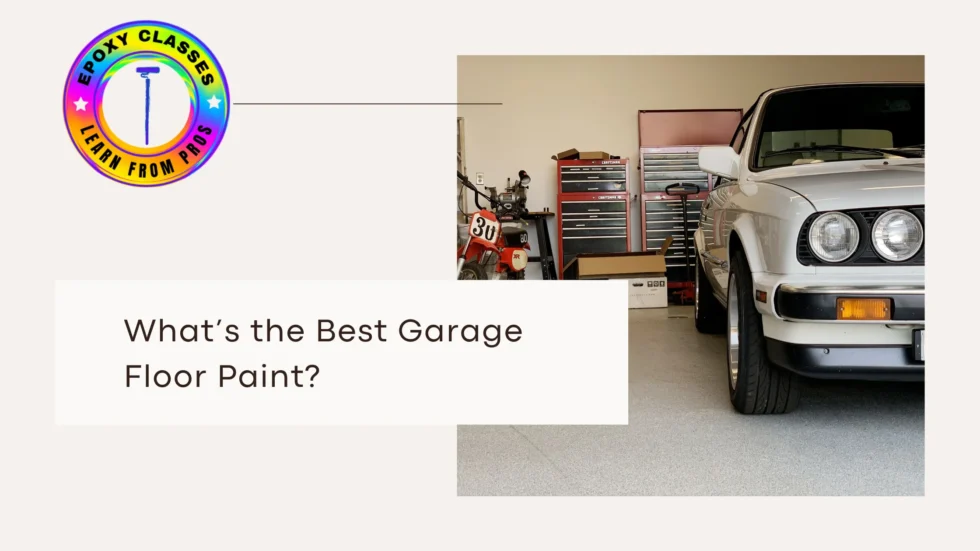
Besides parking, your garage has multiple use options, like a workshop, storage, or even a gym. In this kind of scenario, a garage flooring upgrade is a wise bet. Garage floor paint not only updates but also shields the space from everyday-use damages. With the many options in the market, how can you choose the right paint for your garage floor? We simplify key points about modern epoxy coatings and concrete floor paints. This makes it easy to choose the right garage floor paint for all your needs. Why Garage Floor Paint Matters Your garage floor faces tough conditions every day. It deals with oil stains, moisture, hot tires, and dropped tools. The right paint can turn your concrete slab into a protective barrier. It will help it last longer and improve the look of your garage. We have the perfect option for you, whether you want a shiny finish or great durability. What Is the Best Garage Floor Paint? The short answer? It depends on your needs. Homeowners and DIY enthusiasts looking for style and function often choose epoxy paints. Epoxy paints are considered the best for garage floors. They create a strong, durable layer. This tough coating protects against chemicals, stains, and wear. The best epoxy paint for garage floors offers excellent durability. Epoxy Paint: The Heavy-Duty Choice In the world of high-performance finishes, epoxy paint for metal and concrete stands out. It’s a game-changer for anyone using their garage as a workshop or active space. This impressive paint boosts appearance and provides strong, industrial-grade protection. Thinking about repainting an epoxy floor? It’s doable, but surface prep is critical. The old epoxy layer must be properly cleaned and etched to ensure adhesion. Done right, your garage can look brand new all over again. Other Concrete Finishes for Garage Floors While epoxy remains the top choice, there are other concrete finishes for garage floors worth considering. Acrylic paints and polyurethane coatings are easier to use. They work well in low-traffic areas. If you’re just after a cosmetic touch-up or need a quick solution, a high-quality paint for concrete flooring can still offer decent protection and visual appeal. Looking for concrete garage floor ideas? Popular choices are colored stains, decorative flakes with epoxy, and metallic finishes. These don’t just protect—they elevate the space into something you’re proud to show off. Recommended Garage Floor Paint So, what is the best garage floor paint for your space? It depends on how you use your garage and the finish you want. If durability is your main concern, epoxy is the best choice. It’s ideal for high-traffic and heavy-use areas. This is the top garage floor paint for mechanics, hobbyists, and homeowners who want to get the most from their investment. For light garage use, a good acrylic concrete floor paint is suitable. Choosing the right paint for garage floors means looking for key features. Check for chemical resistance, durability for heavy loads, and easy maintenance. And don’t forget—surface prep is key. Even the best paint for garage floor won’t adhere properly without a clean, dry, and well-etched surface. Final Thoughts Upgrading your garage floor isn’t just a cosmetic improvement—it’s an investment in your property. Choose a full epoxy coating or a strong concrete floor paint. Either option can protect your space for years. Want to learn how to do it like a pro? Epoxy Classes NY offers hands-on training to help you master the art of epoxy flooring. Great for both pros and DIYers, their expert courses help you achieve perfect floors. FAQs What is the best garage floor paint for durability? For lasting floor protection, choose epoxy paint. These coatings form a tough, chemical-resistant barrier. They’re great for garages, workshops, and busy spaces. They offer strong durability. To protect your floors, the best epoxy paint is your top choice. Can I use epoxy paint for metal surfaces in my garage? Yes! Epoxy paint sticks to metal like a loyal friend. It resists rust, corrosion, and daily wear. You’ll often see it on metal tool cabinets, strong workbenches, and tough garage doors. This paint gives a sleek, professional finish that impresses. What paint is best for a garage floor that’s already been painted? Before you start, scrub the old epoxy well. If your floor has epoxy, it needs a deep clean. Once it’s clean, decide whether to etch or sand the surface. If the original epoxy layer is in good shape, you’re in luck! You can easily apply a new layer of epoxy or concrete floor paint, giving your floors a fresh look. Is there a difference between concrete floor paint and epoxy coatings? Yes! Standard paint for concrete floors uses a latex or acrylic base. It’s easy to apply, but it can’t match epoxy’s strength. Epoxy paint creates a strong bond with surfaces, leading to a tough finish. It resists moisture, chemicals, and heavy impacts. So, it’s the best choice for concrete floors in tough conditions. Are there any low-maintenance options for concrete garage floors? For easy maintenance, choose sleek sealed or stained concrete. You might also prefer acrylic concrete garage floor paint. These options are user-friendly but may need more touch-ups than epoxy. For durability, look into workshop floor paints meant for high-traffic areas. What are some popular concrete garage floor ideas? Here are some popular ideas for concrete garage floors: These protect the surface and improve the look of your garage. They make it a clean and functional space.
What Does Paint and Epoxy Remover Do to Plastic
Blog

What Does Paint and Epoxy Remover Do to Plastic?

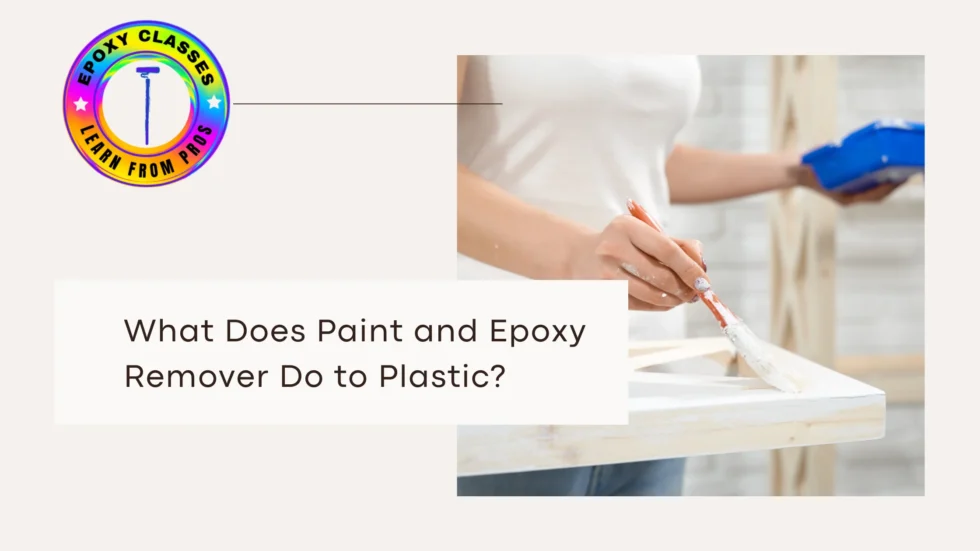
Welcome epoxy professionals and DIY enthusiasts, buckle up and let’s dive deep into the wild ride of paint and epoxy removers and learn what effects they have on plastic. You must be wondering what paint and epoxy removers are made up of and what happens when these chemicals meet your favourite plastic surfaces, don’t worry we have got you all covered. Get yourself ready for a thrilling ride. At Epoxy Classes NY, we’re dedicated to giving you the information to master your skill, whether it’s clearing away an old project or building a beautiful epoxy work of art. So, let’s solve the mystery together, investigate the science, and give you secrets to help you cross this difficult path! The Powerhouse: What Are Paint and Epoxy Removers? Before talking about what paint and epoxy remover do to plastics, it is important to first know what paint and epoxy removers are and its chemical composition. These chemical mixtures are used to dissolve stubborn, hard layers of paint, varnish, and epoxy coatings. They are commonly made up of methylene chloride, acetone, or other harsh solvent. These removers are the go to choice for anyone who wants to strip a surface down to the bare surface, it can be for a new coat or a stunning epoxy pour. But wait, here’s the tricky part: the raw part of paint and epoxy removers does not always get along with plastic. Let’s explore why! The Clash: How Do They Affect Plastic? Plastic is not a single material, it comes in a variety of ranges, from polycarbonates to elastic PVC and fragile acrylics. Each type can have a different reaction. Add paint and epoxy removers into the mix, and the outcome can be a rollercoaster: The effect varies depending on the type of plastic, the chemical composition of the remover, and for how long the plastic was exposed to the remover. Yes, the duration matters too. A quick wipe will not cause too much damage but if you let it sit and soak, that will be a huge problem. It’s like waiting for a disaster to happen! Why Does This Happen? The Science Behind it It’s time to get a little nerdy here and learn the science behind this dramatic meetup. When paint and epoxy remover meets plastic, it destroys and breaks up the chemical bonding of the surface by penetrating in the coating, peeling the surface off. Plastics tend to be polymers, meaning they have long molecules and many chemicals used in removers like acetone or toluene are ready to tangle and get wrapped up in the long chains.  What actually happens is that they slip in and destroy the structure. Here your plastic integrity is compromised. It’s important to keep this in mind that not all plastics behave the same. High density polyethylene (HDPE) resists some of the milder removers, however delicate plastics like acrylonitrile butadiene styrene (ABS) might fold under pressure quickly. Basically think of it as a chemical showdown, where plastic isn’t always the winner! Real-World Risks: When Plastic Meets Remover  Let’s discuss a real life example to explain the risk more clearly. Imagine you’re in one of our epoxy workshops, working on a beautiful resin table. By mistake you spill some epoxy and reach out for a remover to wipe it off, but oh no, your plastic mixing cup melts. Or maybe you’re cleaning paint from a mixed-material piece, and the plastic trim turns cloudy. Remember, these examples are not just hypothetical scenarios; these accidents do happen in real settings and they are real risks. At home or in the workshop, using paint and epoxy removers near plastic tools, containers, or surfaces can lead to costly damage, ruined projects, or even safety hazards if a weakened plastic part fails. How to Protect Your Plastic Yes, paint and epoxy removers are risky to use around plastics but wait, don’t you worry epoxy enthusiasts we have got you all covered. With some knowledge and skills you can continue to use paint and epoxy removers without making your plastic a victim. Here’s how you can protect your plastic: The Takeaway Paint and epoxy removers work best when you have to get rid of the old coating and make way for the new one, but they can be critical and risky to use if plastic is involved. They melt, crack, discolor, or get soft, ruining your project completely. Equipped with knowledge, proper materials, and a dash of caution, you can store your plastics and your epoxy skills strong. Check out additional tips and tricks on our blog site, and feel free to reach out with questions. Frequently Asked Questions Q1. Why do some plastics melt when exposed to removers? Removers contain chemicals like acetone or methylene chloride that act on the molecular bonds in some plastics, breaking them down. They damage the plastic structure, making them a gooey, sticky mess. Q2. Are there plastic-safe paint and epoxy removers? Yes, there are milder options, like citrus-based or water-based removers. These removers are gentler on some plastics. Make sure to read the label first and look for “plastic-safe” claims, but still test it out on a small area. Harsh chemicals like methylene chloride are riskier, so proceed with caution. Q3. How can I protect plastic when using a remover? When using removers make sure to provide a shield to your plastic. Protect it by covering the plastic parts with tape. Remove it completely from that space, or apply the remover quickly and clean it immediately, do not let it sit or soak. After use, wash it with water or mild soap to clean up any residue.  Q4. What happens if I leave the remover on plastic for too long? Leaving the remover on plastic for too long can be harmful. It can melt, crack or discolor plastic, ruining your project completely. Timing is key in epoxy work, act quick and wipe it off immediately  Q5. Will paint and epoxy remover ruin my plastic tools or containers? Yes, it might ruin it.

How to Strip Epoxy A Detailed Guide For a Flawless Finishing 
Blog

How to Strip Epoxy: A Detailed Guide For a Flawless Finishing 

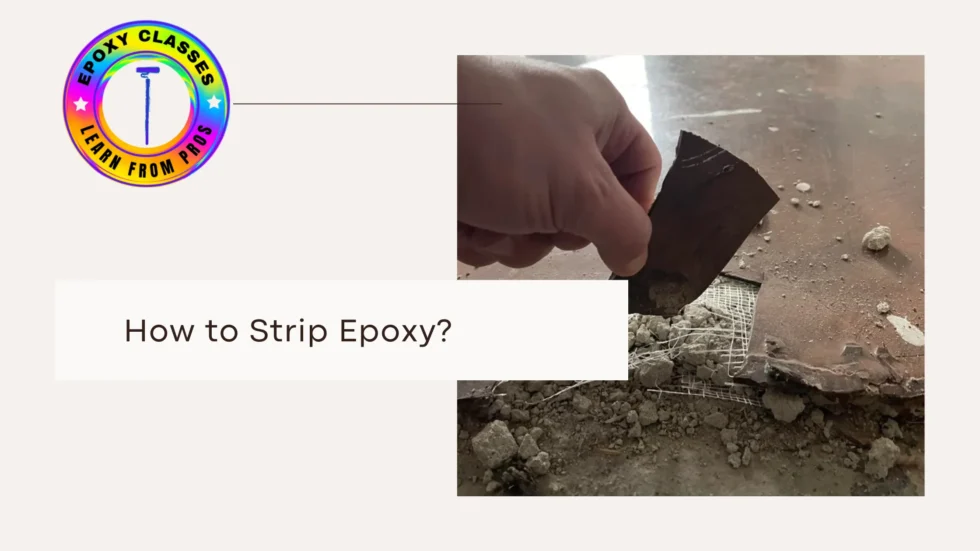
Welcome to the world of epoxy. Whether you are a professional or just an epoxy enthusiast, if you want to know and understand how to remove epoxy you are at the right place. Epoxy Classes NY is a safe space where you can polish your skills and learn the secrets behind a stunning epoxy project. Epoxy is preferred by everyone because of its durability, shine and toughness but the real challenge arises when you have to remove epoxy. Knowing how to remove epoxy can help you save those projects that have gone wrong or prepare surfaces for a beautiful redo. In this blog we are providing a detailed guide on how to remove cured epoxy, explore what dissolves epoxy, and provide you with pro tips to conquer any surface. So tie your seat belts, let’s get on this ride and strip that epoxy coat like a champ. Why Strip Epoxy?  Epoxy bonds and sticks to wood, metal, and concrete like a beast. Be it resin, glue, or paint it is used and preferred by many to create mesmerizing countertops, floors or any other art piece. But the real question comes when you meet with a spill, mistake or any other accident that makes you start your project from the beginning and then you start wondering; how to remove epoxy resin or how to get epoxy off. So, why strip epoxy? Any excess epoxy dripping between wood planks or a hardened, cured layer wanting to be removed. Knowing how to strip epoxy is an important skill. But fear not! From removing epoxy resin to tackling epoxy floor removal, we know how to make it happen. Let’s get into the action! Tools and Methods to Strip Epoxy Stripping epoxy isn’t a one-size-fits-all gig. The approach depends on the surface, the epoxy type, and how stubborn it’s being. Here’s your toolkit to master how to remove hardened epoxy: 1. Use Mechanics 2. Chemicals to Rescue 3. Surface-Specific Strategies What Chemical Changes Occur as Unreacted Epoxy? It’s time to bring in some science now. Let’s get a little nerdy and learn about unreacted epoxy. In the beginning epoxy always starts with a liquid mix of resin and hardener. When epoxy is unreacted, it’s flexible and elastic in nature, but once cured, it changes into a hard tough matrix. Here another question comes; What dissolves epoxy or how to dissolve cured epoxy resin? Tools and equipment that dissolve epoxy targets these bonds, breaking them down with solvents or heat. Unreacted epoxy is easy to clean, just wipe it with acetone to remove epoxy before it sets. Once it is cured it gets hard, making the process of removing epoxy a lot difficult. To remove a cured epoxy you’ll need a strong epoxy resin remover. How to Remove Epoxy Like a Professional Here is a step by step guide for you on how to remove epoxy adhesive or resin: Pro Tips from Epoxy Classes NY Spilled epoxy? Need to strip a floor? Our expert-led classes teach you how to get epoxy off any surface. Reserve your spot and transform mistakes into mastery! Learn more about epoxy from our blog page. Frequently Asked Questions How to remove epoxy resin without damaging the surface? Test a small part to avoid damaging a large surface. For delicate surfaces like wood, use heat and a plastic scraper to remove resin from wood. For counters, a mild epoxy resin remover will work best. How to remove epoxy from plastic without melting it? Plastics are delicate, they damage easily if exposed to harsh chemicals. Solvent like acetone can damage plastic. Go for a plastic safe epoxy resin remover or light scraping. What to do when epoxy spills between wood cracks? Act fast! Wipe that liquid epoxy with acetone to remove epoxy or an epoxy cleaner. If you don’t clean it quickly it will cure and get hard. For cured spills, soften with heat first, using a heat gun and then scrape off with a small tool.  How to remove epoxy from countertop safely? Soften with a heat gun, scrape gently, and use a mild epoxy resin remover. Wipe with epoxy cleaner to finish. Always test first to avoid damaging the entire surface. What chemical changes occur as unreacted epoxy? Unreacted epoxy is liquid. The changes that occur are cross-linking when cured, making it hard and tough. Wipe the unreacted epoxy quickly with acetone to remove epoxy before it sets and cures.

Epoxy Resin Market Outlook & Trends — How EpoxyClassesNY Stays Ahead
Blog

Epoxy Resin Market Outlook & Trends — How EpoxyClassesNY Stays Ahead

The epoxy resin market is growing in unprecedented proportions. What used to be a convenient material to bond industries has become a necessity. It finds application in construction, flooring, the motor industry, electronics and home decoration. No matter if you’re a seasoned contractor or new to the trade, it’s crucial to understand the direction of the epoxy market. This way, you can stay ahead. And that is what EpoxyClassesNY is there to assist you with. It is not just another training program. EpoxyClassesNY offers hands-on training. This training helps students gain real-world skills. Their courses cover everything you need to succeed in the epoxy flooring business. You will employ epoxy chemistry and understand the key tools, as well as learn tips on p work and design. The Epoxy Resin Market: A Global Opportunity There’s no denying it: the epoxy resin market is on fire. Recent industry reports say this global market will reach record numbers by the decade’s end. Why? Because the applications for epoxy resins are expanding across almost every major industry. Let’s break it down. What does this entail on the side of someone in the space business? It is an indication of more opportunities than ever before. To exploit them, you require the correct training and means. Why the Demand for Epoxy Resins Keeps Growing The rapid growth of the epoxy market can be attributed to a few key factors: 1. Exceptional Performance Epoxy resins are very powerful in bonding. They are not sensitive to the chemicals and remain stable during heat. Epoxy is superior to conventional adhesives or finishes. This applies in congested business places and places of extreme temperatures. Epoxy flooring and countertops are currently sought after in modern interior design. The material is tintable, layered, and texturized in many ways. This is ideal for high-end finishes in the house. It can also be used on smooth and durable floors in retail and industrial areas. Epoxy resin manufacturers are today producing more environmentally friendly goods than ever before. Low-VOC formulas are now common. They offer better curing times and longer-lasting results. The way the adhesive resin business is evolving. Greener solutions are being propelled by new resin research on epoxy. These are inventions that contribute to minimizing environmental effects. Epoxy vs. Traditional Adhesives: A Clear Winner In the larger adhesive resin market, epoxy resins consistently outperform alternatives. Unlike standard glues or urethane-based adhesives, epoxy offers: In aerospace and marine engineering, failure can’t happen. That’s why epoxy is vital for its dependability. Epoxy is also a top pick for everyday uses. It works great for concrete crack repair, surface coatings, and DIY furniture projects. The Epoxy Flooring Industry: Growing From the Ground Up The epoxy flooring industry is one of the fastest-growing sectors in the epoxy resin market. And it’s easy to see why. Epoxy flooring checks every box: There are numerous advantages of epoxy floors. They are now used in warehouses, hospitals, garages, restaurants, retail stores, and high-end homes. However, when the demand grows, so do the requirements for skillful installers who are aware of how to install it properly. Epoxy Classes NY: Bridging the Gap Between Market Demand and Skilled Labor Epoxy resin companies strive to improve their products. Meanwhile, Epoxy Classes NY focuses on training the users. The company has a clear plan: teach real-world epoxy techniques. They focus on hands-on, practical learning. What Makes EpoxyClassesNY Different? Resin Research and Innovation: What’s Next for Epoxy? Due to the current research on resin, the epoxy resin technology is developing fast. Contemporary resins cure quicker, are stronger and emit few harmful gases. There are some exciting trends which include: As technology evolves, installers need to stay current with materials and methods. That’s why EpoxyClassesNY incorporates emerging industry trends into every class. Students don’t just learn to install epoxy. They also find out why some systems perform better in various applications, environments, and industries. Why the Future of the Epoxy Market Depends on Education Epoxy resin business is successful due to both producers and professionals. These professionals guarantee the safe and effective usage of products. Incompetent installation results in failed projects, rework at high expenses, and dissatisfied customers. This is where the training programs, such as EpoxyClassesNY are very important. EpoxyClassesNY doesn’t just teach epoxy skills. We nurture the people who will shape the future of the epoxy industry. Conclusion: Riding the Wave of Opportunity Epoxy installation is a good choice in case you want a combination of skill, creativity, and security. The epoxy market is growing. The epoxy flooring business is flourishing. Nonetheless, there is a lack of competent employees. Through the proper training, you can become a business owner, get a good job, or expand your services. EpoxyClassesNY is the right starting point. Visit EpoxyClassesNY to see course offerings, upcoming classes, and registration options. FAQs: Epoxy Resin Market & Training What is so popular about epoxy flooring? Epoxy floors have high strength, durability, low maintenance, and aesthetic appeal. They suit well in either business or home environments. Does the epoxy flooring industry have work? Yes. This has led to a high demand for certified epoxy installers. More people want this service. This is especially true for staff trained in new application techniques and safety rules. Would epoxy installation be a good career? Yes. Epoxy construction is very much in demand with a high potential for income. It also permits employment in most industries. This profession offers long-term career advancement and flexibility.

How to Choose the Right Epoxy Flooring Training Course
Blog

How to Choose the Right Epoxy Flooring Training Course

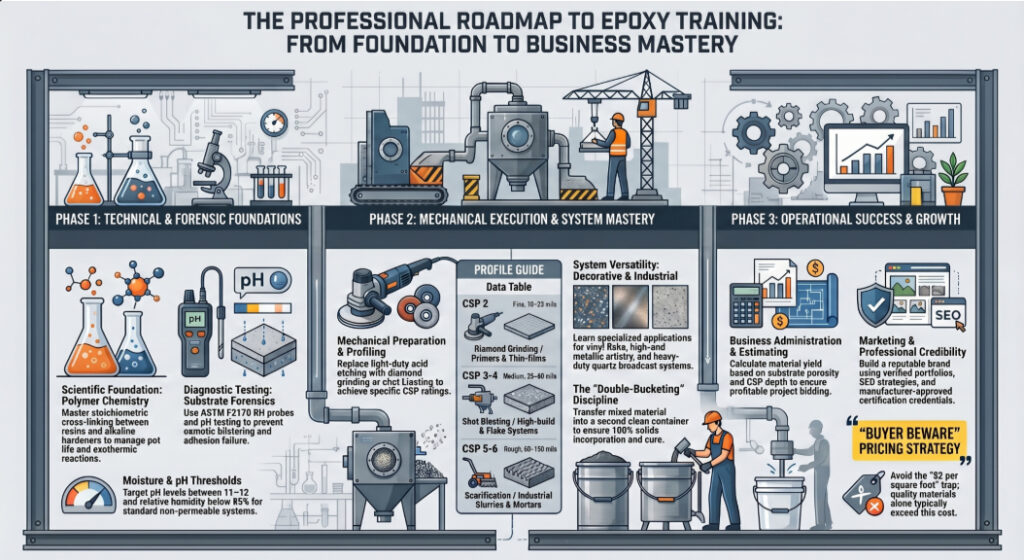
The epoxy flooring industry is consistently growing as homeowners, businesses, and industrial facilities prefer durable and attractive floor coating systems. This demand has created new opportunities to build a career in the flooring industry. However, it is very important to get proper epoxy flooring training for success. Many courses claim to teach epoxy installation, but not all programs offer the same level of education, hands-on experience, or business guidance. If you are about to take epoxy flooring training, it is important to understand the difference between a professional training program and a basic workshop. This guide explains the important factors to evaluate before enrolling in a program. Why Proper Epoxy Flooring Training Is Essential Epoxy flooring may look simple at first, but the installation process requires technical knowledge, attention to detail, and practical skills. Epoxy is a two-part system made up of resin and hardener. These components must be mixed correctly and applied under suitable conditions. Even a small mistake can affect the final result. Some of the most common installation mistakes include: These errors can cause peeling, bubbling, discoloration, or coating failure. A professional training course helps students understand both the science and application techniques behind successful epoxy flooring systems. Rather than making expensive mistakes on real projects, students develop practical skills in a controlled training environment. Check Whether the Course Covers Multiple Epoxy Systems Some projects need different types of flooring systems. A versatile installer can serve a wider range of customers and take advantage of more business opportunities. For that reason, a strong training program should cover several types of resinous flooring systems. Systems Worth Learning The broader your skill set, the more projects you can confidently complete. Assess the Instructor’s Industry Experience The instructor plays a major role in the quality of your learning experience. An experienced instructor brings practical knowledge gained from years of working in the field. They understand real-world challenges and can share solutions that students may not find in manuals or online videos. When researching a course, consider the following questions: Experienced instructors often share valuable insights that help students avoid common mistakes and improve project outcomes. Make Sure Surface Preparation Is Included You should never trust a course that skips the essential preparation work. Professional installers know that surface preparation is the most important factor for a long-lasting bond.Ensure the curriculum includes: Many DIY failures happen because people assume a simple mop or acid wash is enough. A professional course teaches you how to achieve the correct Concrete Surface Profile (CSP) required by the manufacturer.Advice: Smaller class sizes often provide a better learning experience. With fewer students, you’ll have more opportunities to ask questions, receive personalized feedback, and gain hands-on practice during application exercises. Comparison of Common Resinous Coating Systems Understanding these systems helps students select the right product for each project. Coating Type How It Cures Key Advantages Potential Limitations 100% Solids Epoxy Exothermic crosslinking of resin and amine hardener High dry-film thickness; excellent chemical, abrasion, and stain resistance High viscosity; sensitive to outgassing; low moisture permeability Water-Based Epoxy Water evaporation and polymer coalescence Low VOC emissions; highly breathable and vapor-permeable Limited film build; reduced chemical and abrasion resistance Solvent-Borne Epoxy Solvent evaporation and polymer crosslinking Superior surface wetting; excellent adhesion to challenging substrates High VOC emissions; strong odor; ventilation and respiratory protection required Polyaspartic Rapid aliphatic polyurea/urethane reaction Extreme UV stability; rapid cure times for fast return to service Short pot life; sensitive to humidity; high material cost Business Training Is Just as Important as Installation Skills Technical skills alone are not enough to run a profitable operation. A comprehensive course must include business administration. You need to know how to: Ask About Support After the Course Completing a training course is only the beginning.As learners begin working on projects, new questions often arise. Access to ongoing support can make a significant difference during the early stages of a career.Some programs offer: Being in connection with experienced professionals after the training can provide valuable guidance when unexpected challenges occur. Questions to Ask Before Enrolling (Your Checklist) Before you commit your tuition, use this checklist to evaluate the quality of the program: Why Choose Epoxy Classes in Upstate New York In the Northeast, specialized training centers in Upstate New York, including Johnstown, offer a practical, hands-on learning environment. These programs are designed for both beginners and existing contractors, providing a hands-on learning environment that covers multiple epoxy systems. These classes’ small group instruction and real-world application questions help local professionals build a strong foundation for long-term success. In Closing When you have to choose the right epoxy flooring training course, you should not only consider the cost. The best programs provide thorough chemistry education, mechanical preparation skills, and business literacy. By investing in a hands-on certification program, you are not just learning a skill; you are gaining qualifications that can support your career development.

Hands-on epoxy flooring training in Johnstown, NY. Learn real skills, build a real business, and create floors that last.

TRAINING

Copyright © 2026 – Epoxy Classes NY

Scroll to Top